When the original chalet finally gave way in 2009, it wasn’t just a building that collapsed — it was decades of family history. Buckets catching rainwater in the living room had become normal. The balcony had weathered more storms than we could count. And then, one winter, it simply couldn’t hold on any longer.
What followed was not just a rebuild. It was a deeply personal project — one rooted in family, craftsmanship and deep respect for this extraordinary stretch of coastline.
The new Greenshutters was designed by Paul Carroll’s father, Westgarth Carroll, an architect who understood both the landscape and the legacy of the site.
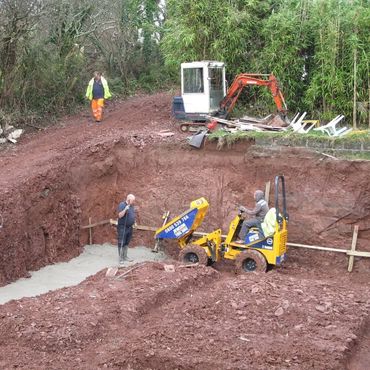
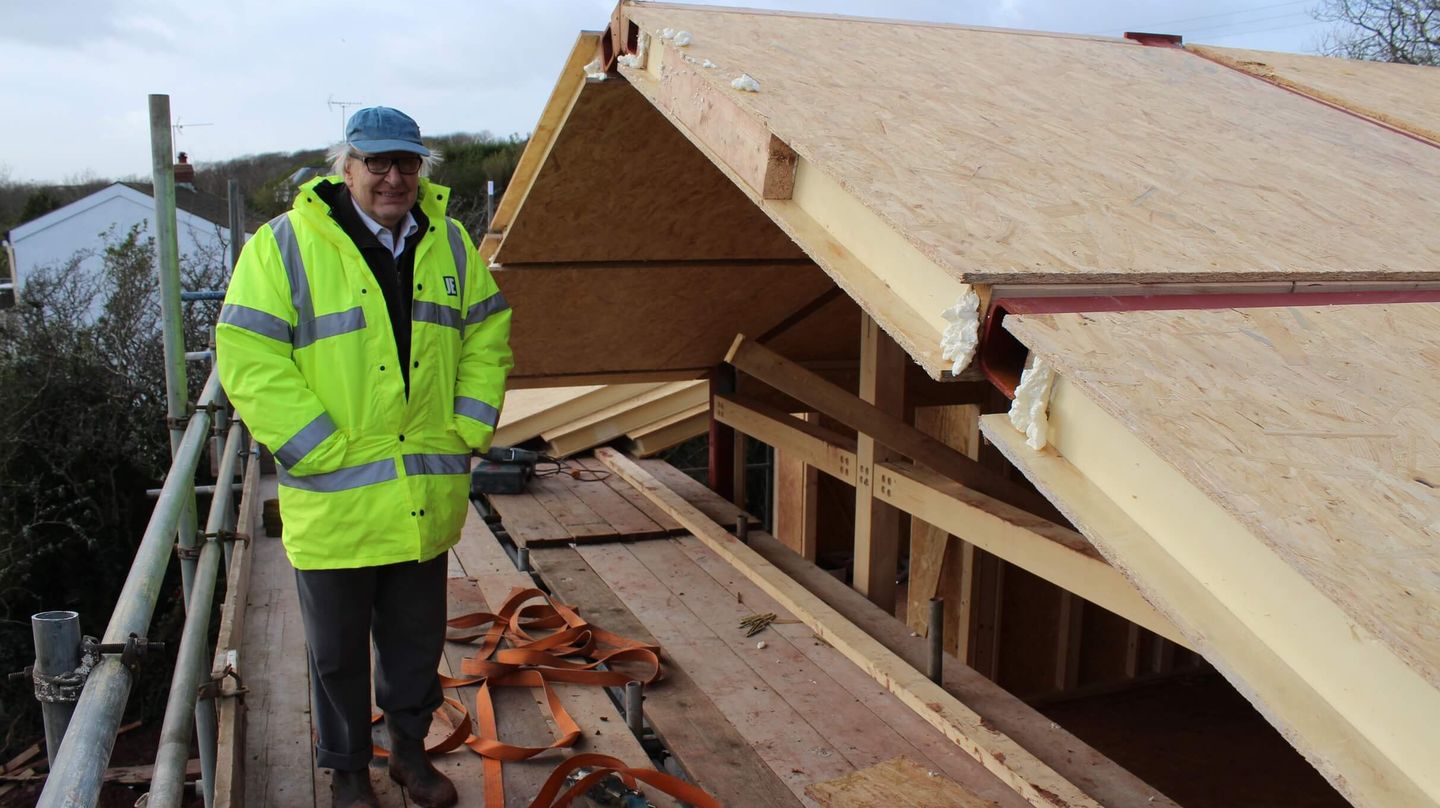
Paul project-managed the build alongside me, travelling regularly from London — often making 10-hour round trips — to oversee progress. What we imagined might take a year became a two-year journey shaped by:
It required resilience. And a great deal of commitment.
The new house was carefully designed to sit within the natural topography rather than dominate it.
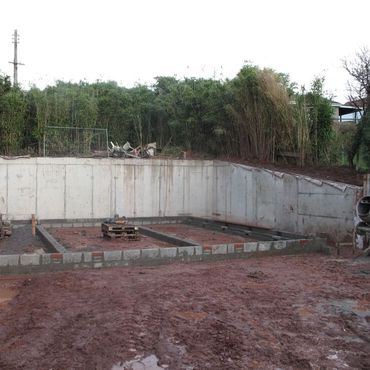
Three sides are formed from steel-reinforced concrete walls, extending 14 feet down into the rock. This structural solution allowed the house to be partially embedded into the hillside, hidden from view both from the road and from the beach.
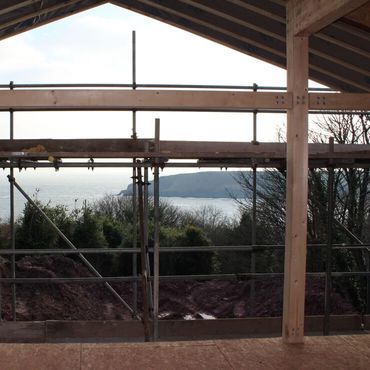
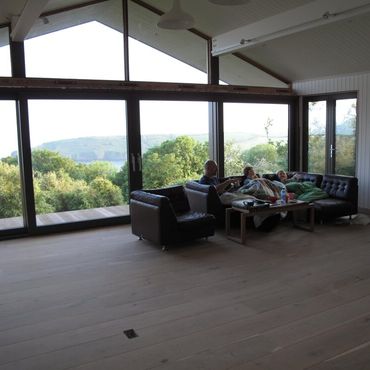
From a distance, it remains discreet. From inside, it opens outwards — framing the sea, sky and horizon.
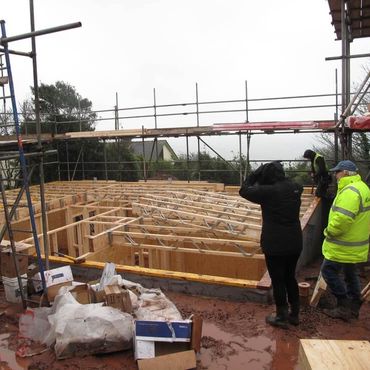
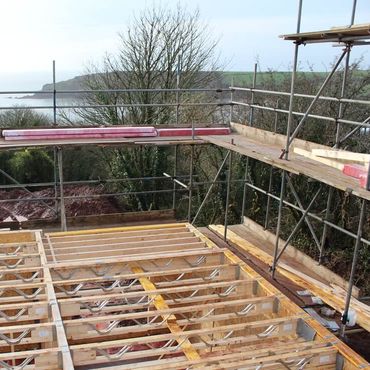
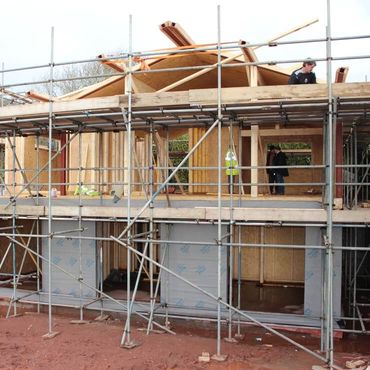
The visible structure, a timber and steel frame, went up in just two weeks. But the intricate interior detailing extended the build considerably.
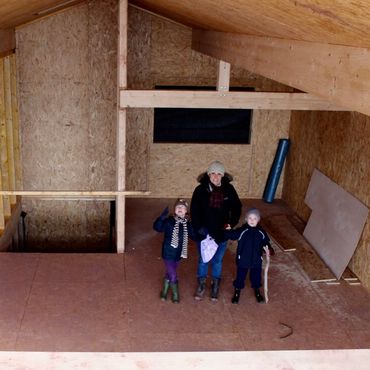
The entire top floor walls and ceilings were internally boarded in tongue-and-groove timber to create the feeling of a classic beach house: warm, textural and timeless. This was not a standard fit-out. It was detailed and deliberate.
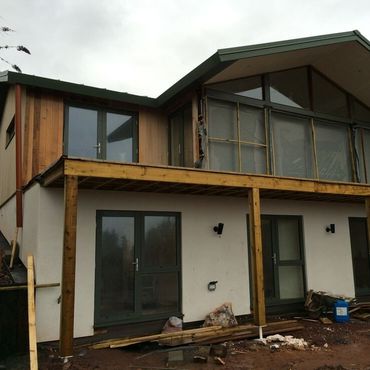
The bespoke staircase, inspired by Italian design, features solid oak treads and a handrail crafted by a joiner in Newport. The balcony balustrade was influenced by time spent on yachts, Custom-made to match the RAL colour of the windows, clean-lined yet coastal.
The hand-built kitchen was designed by us and made by long-standing friend Ben Mather of Ben Mather & Company. A space built for gathering, cooking and conversation.
One of the most important principles of the build was to support local Welsh industry and craftsmanship wherever possible.
Even the detailing reflects durability and care:
This was never about building quickly. It was about building properly.
Greenshutters was designed to meet Passivhaus standards, with triple-glazed windows and doors and solar-gain design principles that allow the house to hold warmth naturally.
There is no conventional central heating system. Instead:
We are off the main drains, with a 26,000-litre Klargester waste tank supporting the property. Sustainability was never an afterthought — it was foundational.
Every bedroom opens directly onto a garden, terrace or balcony, ensuring connection to the outdoors. A vast terrace wraps around the house, designed for long lunches, evening conversations and gatherings under wide Pembrokeshire skies.
During lockdown in 2020, we added a Boat House — clad in traditional green corrugated metal inspired by local chalets and garages. It is the first thing you see when arriving down Jason Road. The main house remains hidden behind bamboo and ancient hawthorn trees, revealing itself slowly.
That sense of arrival was intentional.
What emerged after two years was not simply a replacement for the old chalet. It was its evolution.
A home rooted in the same footprint.
Built by family.
Shaped by landscape.
Crafted largely by Welsh hands.
Guests often comment on how warm the house feels. not just physically, but emotionally. The air feels fresh. The light moves beautifully through the space. Conversations linger longer around the kitchen island. The terrace draws people outside.
Greenshutters was built to last, structurally, environmentally and emotionally.
It began as a modest wooden chalet in the 1960s. Today, it is a contemporary coastal home designed to hold families and friendships for decades to come.
And that continuity, from Paul’s first steps on the beach to the house that stands there now, is what makes it feel so special.